Haematopus ostralegus
Jump to navigation
Jump to search
IOC Classification: Domain: Eukaryota • Regnum: Animalia • Phylum: Chordata • Subphylum: Vertebrata • Infraphylum: Gnathostomata • Superclassis: Tetrapoda • Cladus: Amniota • Cladus: Reptilia • Cladus: Archosauria • Classis: Aves • Superordo: Neognathae • Ordo: Charadriiformes • Familia: Haematopodidae • Genus: Haematopus • Species: Haematopus ostralegus Linnaeus, 1758

Wikispecies has an entry on:
- IUCN:
 Haematopus ostralegus Linnaeus, 1758 (old web site) (Near Threatened) (Warning: different IUCN Id between wikidata 'Eurasian Oystercatcher' (22693613) and wikicommons (22733462))

- English: Eurasian Oystercatcher, oystercatcher, eurasian oystercatcher
- Afrikaans: Bonttobie (Bontoestervanger)
- العربية: صائد المحار الأوراسي
- مصرى: صائد المحار الاوراسى
- asturianu: llevantallámpares, llampariegu
- azərbaycanca: Sağsağanı alacüllüt
- башҡортса: Ҡом һайыҫҡаны
- беларуская: Крывок
- беларуская (тарашкевіца): Крывок
- български: Стридояд
- বাংলা: শুক্তিভোজী বাটান
- brezhoneg: Morbig-Eurazia
- català: garsa de mar
- čeština: ústřičník velký, Ústřičník velký
- Cymraeg: pioden fôr, Pioden y Môr
- dansk: Strandskade
- Deutsch: Austernfischer
- Schweizer Hochdeutsch: Austernfischer
- Ελληνικά: Στρειδοφάγος
- Esperanto: Hematopo
- español: Ostrero euroasiático
- eesti: merisk
- euskara: Itsas mika
- فارسی: صدفخوار اوراسیایی
- suomi: meriharakka
- føroyskt: Tjaldur
- français: Huîtrier pie, huîtrier pie
- Nordfriisk: Liiw
- Frysk: Strânljip
- Gaeilge: Roilleach
- Gàidhlig: Gille gdìghde
- galego: Gabita
- ગુજરાતી: દરીયાઈ અબલખ
- Gaelg: Bridjeen
- עברית: שלצדף החוף
- hrvatski: oštrigar
- magyar: csigaforgató
- Bahasa Indonesia: Kedidir Eurasia
- Ido: Ostrokaptero
- íslenska: Tjaldur
- italiano: Beccaccia di mare
- 日本語: ミヤコドリ
- ქართული: ზღვის კაჭკაჭი
- қазақша: Қараала балшықшы
- 한국어: 검은머리물떼새
- коми: Катша бордъя утка
- kernowek: Morbyasen
- Lëtzebuergesch: Mierkréi
- lietuvių: eurazinė jūršarkė, Jūrinė šarka
- latviešu: jūras žagata
- македонски: Евроазиски остригар
- മലയാളം: കടൽമണ്ണാത്തി
- मराठी: शंखिनी
- кырык мары: Алавӹтельӹ
- Bahasa Melayu: Burung Tetiram
- norsk bokmål: Tjeld
- Plattdüütsch: Liewe
- नेपाली: सिपी चरा
- Nederlands: Scholekster, scholekster
- norsk nynorsk: Tjeld
- norsk: Tjeld
- Diné bizaad: Tó wónaanídę́ę́ʼ tábąąh chʼosh haalzheehii
- livvinkarjala: Meriharakku
- Picard: Pie d'mér
- polski: ostrygojad (zwyczajny)
- português: Ostraceiro-europeu
- português do Brasil: Ostraceiro-europeu
- română: Scoicar
- русский: Кулик-сорока
- Scots: Sea-pyot
- davvisámegiella: Cagan
- slovenčina: lastúrničiar strakatý
- slovenščina: školjkarica
- åarjelsaemien: tjïelle
- julevsámegiella: tsagán
- anarâškielâ: merâkuávská
- svenska: strandskata
- தமிழ்: ஐரோவாசியா சிப்பிபிடிப்பான்
- Türkçe: Bayağı poyraz kuşu
- українська: кулик-сорока євразійський
- vèneto: Càenasso
- Tiếng Việt: Chim mò sò
- 吴语: 蛎鹬
- Zeêuws: Bonte piet
- 中文: 蛎鹬]]
- 中文(繁體): 蠣鴴
Photos[edit]
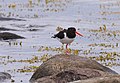
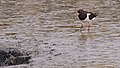
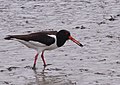
Summer plumage[edit]
-

-

-
-

-
-

-
-

-

-
 Mating
 -
-

-

-
 In flight
 -
 adult
adult -

-
 Group at high tide roost
 -

-

-

-

-

-

-

-
 Breeding oystercatcher
 -
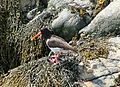
-
 A pair in Iceland
 -

-
-
 Runde, Norway
 -
 Dithmarschen saltmarshes
 -
 Dithmarschen saltmarshes
 -
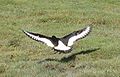 Dithmarschen saltmarshes
 -
 Dithmarschen saltmarshes
 -
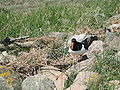 Dithmarschen saltmarshes
 -

-

-

-

-

-
 Texel, Netherlands
 -
 Mudflats of the Eider River, Germany
 -

-
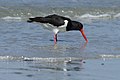 Heligoland, Dune
 -
 ID composite


.jpg)
.jpg)


.jpg)


.jpg)


.jpg)

Winter plumage[edit]

.jpg)

.jpg)

Juvenile[edit]
-
 adult feeding with juvenile
 -
 Juvenile
 -
 Young, Suðuroy, Faroe Islands
 -
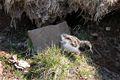 Young, Faroe Islands
_adult_feeding_with_juvenile.jpg)


Eggs[edit]
-
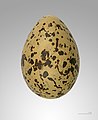
 Museum specimen
 -
 Eggs of an Oystercatcher near North Cape
 -
 Eggs of an Haematopus ostralegus
 -
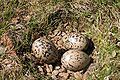 Oystercatchereggs, Faroe Islands


Illustrations[edit]
-
 Range map
yellow: summer
green: year-round
blue: winter -

-
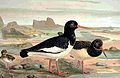 Drawing from 1905
 -
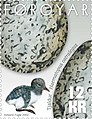 Eggs and fledgling (Faroese stamp from 2002)


