Atlas of Armenia

From Wikimedia Commons, the free media repository

Jump to: navigation, search
Atlas • Άτλας • Атлас • Atlante • Atlasas • אטלס • جهان‌نما • أطلس • एटलस • 地図帳 • 地图集 • 地圖集
WIKIMEDIA COMMONS Atlas of the World

Discuss • Update the atlas • Content and Index of the Atlas • Atlas in categories • Other atlases on line

The introductions of the country, dependency and region entries are in the native languages and in English. The other introductions are in English.
 
Armenia


Contents

Հայաստան

Հայերեն Հայաստան (Հայք) - Հայաստանի Հանրապետություն [1]

Հայաստանը, (Հայաստանի Հանրապետություն), պետություն է Եվրոպայի և Ասիայի սահմանագլխին, Հվ. Կովկասում, անկախացել է Խորհրդային Միությունից 1991-ին: 5-րդ դարում Մեսրոպ Մաշտոցը ստեղծել է հայկական գիրը, որը մինչև այսօր գործածվում է: Հայաստանի կրոնը Հայ Առաքելական եկեղեցին է` 301թ.-ից:

English Armenia - Republic of Armenia

The Republic of Armenia is a landlocked mountainous country in Eurasia between the Black Sea and the Caspian Sea, located in the Southern Caucasus. It shares borders with ► Turkey to the west, ► Georgia to the north, ► Azerbaijan with the break away republic of ► Nagorno-Karabakh to the east, and ► Iran and the ► Nakhichevan exclave of Azerbaijan to the south.


Short name  Armenia
Official  name Republic of Armenia
Status Independent country since 1990, recognized 1991
Location Caucasus
Capital Երեւvan)
Population 3,215,800 inhabitants
Area 29,800 km²
Major  languages Armenian
Major  religions Armenian Apostolic Church
More information Armenia, Geography of Armenia, History of Armenia and Politics of Armenia
More  images Armenia - Armenia (Category).

General maps

Map of Armenia
Detailed map of Armenia
Topography of Armenia

Maps of divisions

This section holds maps of the administrative divisions.

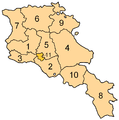
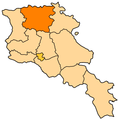
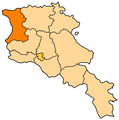
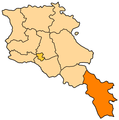
Provinces of Armenia
Names of the provinces in Armenian

History maps

This section holds a short summary of the history of the area of present-day Armenia, illustrated with maps, including historical maps of former countries and empires that included present-day Armenia.

Between 1500 - 1200 BC, states and tribes called Mitanni and Hayasa-Azzi existed in the western half of the Armenian Highland, often clashing with the Hittite Empire. Between 1200 - 800 BC, much of Armenia was united under a confederation of kingdoms, which Assyrian sources called Nairi ("Land of Rivers" in Assyrian"). The Egyptians used Nairi for Mitanni, referring to the "Land of Rivers". Nairi was later absorbed into the kingdom of Urartu. The Armenian state of Urartu exists between the ninth and sixth century BC. The second map shows Urartu at its greatest extent in the time of Sarduris II, 743 BCE. The following maps show the territorial development of Urartu between 860 and 585 BCE.
Urartu 860-840 BCE
Urartu 840-820 BCE
Urartu 820-785 BCE
Urartu 785-753 BCE
Urartu 753-743 BCE
Urartu 743-735 BCE
Urartu 735-715 BCE
Urartu 715-713 BCE
Urartu 713-680 BCE
Urartu 680-610 BCE
Urartu 610-585 BCE
The Region in the 9th to 7th centuries BC
Caucacus 2000-600 BC
After the fall of Urartu around 585 BC, the Kingdom of Armenia was ruled by the Armenian Orontid Dynasty, which governed the state in 585 - 190 BC. Under Orontids, Armenia at times was an independent kingdom, and at other times a satrapy of the Persian Empire. This map shows the Achaemid Empire (Persia (648–330 BCE) at its greatest extent. More maps: Atlas of the Persian Empire.
Armenia is conquered by the Macedonian Empire. More maps: Atlas of the Macedonian Empire.
After the death of Alexander the Great, Armenia becomes part of the Seleucid Empire.
Kingdom of Armenia around 300 BCE under the Orontid Dynasty is most of the time a Seleucid vasal state. See also the next map.
Kingdom of Armenia in 250 BC.
After the destruction of the Seleucid Empire, a Hellenistic Armenian state was founded in 190 BC, with Artaxias becoming its first kings and the founder of the Artaxiad dynasty (190 BC - 1 AD). At the same time, a western portion of the kingdom split as a separate state under Zariadris, which became known as Lesser Armenia while the main kingdom acquired the name of Greater Armenia. At its zenith, from 95 to 66 BC, Greater Armenia extended its rule over parts of the Caucasus and the area that is now eastern and central Turkey, northwestern Iran, Palestine, Syria and Lebanon, forming the second Armenian empire. For a time, Armenia was one of the most powerful states in the Roman East. It eventually confronted the Roman Republic in a war, which it lost in 66 BC, but nonetheless preserved its sovereignty. Tigranes continued to rule Armenia as an ally of Rome until his death in 55 BCE. This map shows Armenia between 189 and 63 BCE.
Later on, in 1 AD, Armenia came under Roman control until the establishment of the Armenian Arsacid dynasty. The Armenian people then adopted a Western political, philosophical, and religious orientation. For more maps see the Atlas of the Roman Empire.
Armenia was often a focus of contention between Rome and Parthia. This map shows the Parthian Empire (250 BCE-226 CE) controlling parts of Armenia. The Parthians forced Armenia into submission from 37 to 47, when the Romans retook control of the kingdom.
Under Nero, the Romans fought a campaign (55–63) against the Parthian Empire, which had invaded Armenia. After gaining (60) and losing (62) Armenia, the Romans entered (63) into the territories of Vologases I of Parthia, and returned the Armenian kingdom to Tiridates, founder of the Arshakuni Dynasty. This map shows Armenia under the Arshakuni Dynasty.
The Persian Sassanian Empire occupied Armenia in 252 and held it until the Romans returned in 287. In 387 the kingdom was split between the Byzantine or East Roman Empire and the Persians. Western Armenia quickly became a province of the Roman Empire under the name of Armenia Minor; Eastern Armenia remained a kingdom within Persia until 428, when the local nobility overthrew the king, and the Sassanids installed a governor in his place. For more maps see the Atlas of the Persian Empire.
In 591, the great Byzantine warrior and Emperor Maurice defeated the Persians and recovered much of the remaining territory of Armenia into the empire. The conquest was completed by the Emperor Heraclius in 629. See for more maps the Atlas of the Byzantine Empire.
In 645, the Muslim Arab armies of the Caliphate had attacked the country, which fell before them. Armenia, which once had its own rulers and was at other times under Persian and Byzantine control, passed largely into the power of the Caliphs. This map shows the expansion of the Caliphate: I: Muhammad; II: Abu Bakr; III: Omar and IV: Othman. See for more maps the Atlas of the Caliphate.
Evolving as a feudal kingdom in the 9th century, the Bagratuni Dynasty led Armenia on a brief cultural, political, and economic renewal. A new capital, Ani was constructed at the Kingdom's apogee, after recognition as a sovereign kingdom by Baghdad in 885, and Constantinople in 886. This map shows Armenia in the ninth century
This map shows the Armenian Kingdom of Vaspourakan in the 10th century
This map shows Armenia under the Bagratuni Dynasty around 1000.
Armenia under control of Georgia 1089-1125
File:Geor tamro.gif Kingdom of Georgia at the peak of her might, 1184-1225
To escape death or servitude at the hands of those who had assassinated his relative, Gagik II, King of Ani, an Armenian named Roupen with some of his countrymen went into the gorges of the Taurus Mountains and then into Tarsus of Cilicia. Here the Byzantine governor of the place gave them shelter. Thus, from around 1080 to 1375, the focus of Armenian nationalism moved south, as the Armenian Kingdom of Cilicia. This map shows Cilician Armenia 1199-1375
The Armenian Kingdom of Cilicia
This map shows changes in borders of the Mongol Empire from founding by Genghis Khan in 1206, Genghis Khan's death in 1227 to the rule of Kublai Khan (1260–1294). (Uses modern day borders). For certain times, Armenia was under control of the Mongols.
   Mongol Empire

By 1294 the empire had split into:

   Empire of the Great Khan (Yuan Dynasty)
The region in the aftermath of the Mongolian invasion, 1220-1245
The region 1450-1515
Armenia is conquered under the rule of Selim II (1524 – 1574) by the Ottoman Empire. However, the initial accession begins with Mehmed II, who also offered the Ottoman support to initiate Armenian Patriarch in Constantinople. This rule continued 300 years till the following the Russo–Turkish War (1828–1829), when the Eastern Armenia of this territory was ceded to the Russian Empire. The remaining Ottoman Armenia, till World War I, under Ottoman rule was also referred to as Western Armenia. See for more maps the Atlas of the Ottoman Empire.
File:1533-1896.jpg.gif This map shows the Russian expansion from 1533 to 1896. See for more maps the Atlas of Russia.
The western part became part of the Ottoman Empire. Major Armenian extermination sites in the Ottoman Empire during the Armenian Genocide.
Armenia in 1914
File:DRAMap.png Between 1917 and 1922 Armenia is independent as the Democratic Republic of Armenia.
Border problems with the Azerbaijan Democratic Republic.
Democratic Republic Armenia with the Democratic Republic of Georgia
In 1921 soviets invade Armenia and establish the Armenian Soviet Socialist Republic, that joins Transcaucasia in 1922.
In 1922 the Soviet Union is formed of which Transcaucasia and later Armenia becomes a constituent republic. See the Atlas of the Soviet Union.
Turkish-Soviet frontier per the Treaty of Kars.
Armenia inside the Sovier Union

Armenia regains independence in 1991.

Old maps

This section holds copies of original general maps older than 70 years of this entry.

Old map of Armenia from 1522
Old map of Armenia from 1579
Caucasus in 1729
Map of Armenia and the South Caucasus in the Russian Empire from 1882
Wilsonian Armenia in the Treaty of Sèvres

Ethnic maps

Demographic map
Map of Armenia in the colors of the Armenian flag.

Satellite maps

Satellite image of Armenia from May 2003

Notes and references

General remarks:

  • The WIKIMEDIA COMMONS Atlas of the World is an organized and commented collection of geographical, political and historical maps available at Wikimedia Commons. The main page is therefore the portal to maps and cartography on Wikimedia. That page contains links to entries by country, continent and by topic as well as general notes and references.
  • Every entry has an introduction section in English. If other languages are native and/or official in an entity, introductions in other languages are added in separate sections. The text of the introduction(s) is based on the content of the Wikipedia encyclopedia. For sources of the introduction see therefore the Wikipedia entries linked to. The same goes for the texts in the history sections.
  • Historical maps are included in the continent, country and dependency entries.
  • For Burma, see Myanmar; Great Britain and Northern Ireland, see United Kingdom; Ivory Coast, see Côte d'Ivoire; Pridnestrovie, see Transnistria; Taiwan, see China, Republic of; Timor-Leste, see East Timor.
  • The status of various entities is disputed. See the content for the entities concerned.
  • The maps of former countries that are more or less continued by a present-day country or had a territory included in only one or two countries are included in the atlas of the present-day country. For example the Ottoman Empire can be found in the Atlas of Turkey.
  1. Romanization: Hayastan (Hayq)- Hayastani Hanrapetutyun.

Entries available in the atlas

General pages
Atlas · Historical atlas · Index of the Atlas · Names in native languages

The world and its continents and oceans
General maps of the world · Historical maps of the world · Old maps · Africa · North and South America · Antarctica · Asia · Europe (History, European Union) · Oceania · Oceans

Historical era and themes
Prehistory · Antiquity · Middle Ages · Rise of Islam · Early Modern Age · Early American Societies · Early Asian Societies · Age of Renaissance · Colonialism · 20th Century · World War I · World War II

Countries with undisputed status
Afghanistan · Albania · Algeria · Andorra · Angola · Antigua and Barbuda · Argentina · Armenia · Australia · Austria · Azerbaijan · Bahamas · Bahrain · Bangladesh · Barbados · Belarus · Belgium · Belize · Benin · Bhutan · Bolivia · Bosnia and Herzegovina · Botswana · Brazil · Brunei · Bulgaria · Burkina Faso · Burundi · Cambodia · Cameroon · Canada · Cape Verde · Central African Republic · Chad · Chile · China · Colombia · Comoros · Congo (Democratic Republic) · Congo (Republic) · Costa Rica · Côte d’Ivoire · Croatia · Cuba · Cyprus · Czech Republic · Denmark · Djibouti · Dominica · Dominican Republic · East Timor · Ecuador · Egypt · El Salvador · Equatorial Guinea · Eritrea · Estonia · Ethiopia · Fiji · Finland · France · Gabon · Gambia · Georgia · Germany · Ghana · Greece · Grenada · Guatemala · Guinea · Guinea-Bissau · Guyana · Haiti · Honduras · Hungary · Iceland · India · Indonesia · Iran · Iraq · Ireland · Israel · Italy · Jamaica · Japan · Jordan · Kazakhstan · Kenya · Kiribati · Korea (Democratic People’s Republic) · Korea (Republic) · Kuwait · Kyrgyzstan · Laos · Latvia · Lebanon · Lesotho · Liberia · Libya · Liechtenstein · Lithuania · Luxembourg · Macedonia (Republic) · Madagascar · Malawi · Malaysia · Maldives · Mali · Malta · Marshall Islands · Mauritania · Mauritius · Mexico · Micronesia (Federated States) · Moldova · Monaco · Mongolia · Montenegro · Morocco · Mozambique · Myanmar · Namibia · Nauru · Nepal · The Netherlands · New Zealand · Nicaragua · Niger · Nigeria · Norway · Oman · Pakistan · Palau · Panama · Papua New Guinea · Paraguay · Peru · Philippines · Poland · Portugal · Qatar · Romania · Russia · Rwanda · Saint Kitts and Nevis · Saint Lucia · Saint Vincent and the Grenadines · Samoa · San Marino · São Tomé and Príncipe · Saudi Arabia · Senegal · Serbia · Seychelles · Sierra Leone · Singapore · Slovakia · Slovenia · Solomon Islands · Somalia · South Africa · Spain · Sri Lanka · Sudan · Suriname · Swaziland · Sweden · Switzerland · Syria · Tajikistan · Tanzania · Thailand · Togo · Tonga · Trinidad and Tobago · Tunisia · Turkey · Turkmenistan · Tuvalu · Uganda · Ukraine · United Arab Emirates · United Kingdom · United States · Uruguay · Uzbekistan · Vanuatu · Vatican City · Venezuela · Vietnam · Yemen · Zambia · Zimbabwe

Countries with disputed status
Abkhazia · China (Republic)/Taiwan · Kosovo · Nagorno-Karabakh · Northern Cyprus · Palestine · Somaliland · South Ossetia · Tamil Eelam · Transnistria · Western Sahara

Dependencies and other overseas territories
Akrotiri and Dhekelia · Åland · American Samoa · Anguilla · Aruba · Ascension Island · Ashmore and Cartier Islands · Baker Island · Bermuda · Bouvet Island · British Indian Ocean Territory · British Virgin Islands · Cayman Islands · Christmas Island · Clipperton Island · Cocos (Keeling) Islands · Cook Islands · Coral Sea Islands · Faroe Islands · French Guiana · French Polynesia · French Southern and Antarctic Lands · Gibraltar · Greenland · Guadeloupe · Guam · Guantanamo Bay · Guernsey · Heard Island and McDonald Islands · Hong Kong · Howland Island · Isle of Man · Jan Mayen · Jarvis Island · Jersey · Johnston Atoll · Kingman Reef · Macau · Martinique · Mayotte · Midway Atoll · Montserrat · Navassa Island · Netherlands Antilles · New Caledonia · Niue · Norfolk Island · Northern Mariana Islands · Palmyra Atoll · Pitcairn Islands · Puerto Rico · Réunion · Saint Helena · Saint-Barthélemy · Saint Martin (France) · Saint-Pierre and Miquelon · Svalbard · Tokelau · Tristan da Cunha · Turks and Caicos Islands · United States Virgin Islands · Wake Island · Wallis and Futuna

Disputed areas
Kashmir · Paracel Islands · Spratly Islands · Falkland Islands · South Georgia and South Sandwich Islands

Subnational autonomous entities
Aceh · Adjara · Adygea · Altai · Andalusia · Aosta Valley · Aragon · Athos · Azores · Balearic Islands · Bashkortostan · Basque Autonomous Community · Bougainville · Brussels · Buryatia · Canary Islands · Catalonia · Chechnya · Chuvashia · Corsica · Crimea · Curaçao · Dagestan · Easter Island · England · Extremadura · Bosnia and Herzegovina (Federation of) · Flanders · Friuli-Venezia Giulia · Gagauzia · Galicia · Galápagos Islands · Gorno-Badakhshan · Guangxi · Ingushetia · Inner Mongolia · Kabardino-Balkaria · Kalmykia · Karachay-Cherkessia · Karakalpakstan · Karelia · Khakassia · Komi · Kurdistan (Iraqi) · Madeira · Mari El · Mindanao · Mordovia · Nakhichevan · Navarre · Nevis · Ningxia · North Ossetia-Alania · Northern Ireland · Quebec · Saint Martin (Netherlands) · Sakha · Sardinia · Scotland · Sicily · Srpska · Tatarstan · Tibet · Trentino-Alto Adige · Tuva · Udmurtia · Vojvodina · Wales · Wallonia · Xinjiang · Zanzibar

Other regions
Basque Country · Burzenland · Kurdistan · Sápmi

Former countries
Austria-Hungary · Byzantine Empire · Caliphate · Czechoslovakia · Frankish Empire · Inca Empire · Macedonian Empire · Prussia · Roman Empire · Soviet Union · Yugoslavia

Themes
Administrative divisions · International organizations · Languages · Religions

Old atlas
Stielers Handatlas 1891

Personal tools
In Wikipedia