Atlas of the Czech Republic

From Wikimedia Commons, the free media repository

Jump to: navigation, search
Atlas • Άτλας • Атлас • Atlante • Atlasas • אטלס • جهان‌نما • أطلس • एटलस • 地図帳 • 地图集 • 地圖集
WIKIMEDIA COMMONS Atlas of the World

Discuss • Update the atlas • Content and Index of the Atlas • Atlas in categories • Other atlases on line

The introductions of the country, dependency and region entries are in the native languages and in English. The other introductions are in English.
 
Czech Republic


Contents

Česká republika (Czech)

Česky Česká republika

Česko, též Česká republika (k názvu viz níže), je vnitrozemský stát ve střední Evropě. Sousedí na západě s Německem, na severu s Polskem, na východě se Slovenskem a na jihu s Rakouskem. Území Česka se skládá ze tří historických zemí – Čech, Moravy a Českého Slezska, přičemž od roku 1920 jsou součástí Čech a Moravy malé okrajové části původních Dolních Rakous, kterými jsou České Velenice s okolím (tzv. Vitorazsko), a Valticko s tzv. Dyjským trojúhelníkem.

English Czech Republic - Czech Republic

The Czech Republic is a landlocked country in Central Europe and a member state of the European Union. The country has borders with ► Poland to the north, ► Germany to the northwest and west, ► Austria to the south, and ► Slovakia to the east. The capital and largest city is the historic Prague (Praha), a major tourist attraction. The country is composed of two entire historic regions, Bohemia and Moravia, and parts of Silesia. See also: Atlas of the European Union

Other languages Deutsch Tschechien liegt in Mitteleuropa und grenzt an Deutschland (810 km) im Westen und Nordwesten, an Polen (762 km) im Norden, die Slowakei (252 km) im Osten und Österreich (466 km) im Süden. Tschechien umfasste traditionell die drei historischen Länder Böhmen, Mähren und Mährisch-Schlesien (siehe Verwaltungsgliederung). Der Staat wurde 1999, acht Jahre nach Auflösung des Warschauer Vertrags, Mitglied der NATO und trat am 1. Mai 2004 der Europäischen Union bei.

Short name  Czech Republic
Official  name Czech Republic
Status Independent country since 1993, member of the ► European Union since 2004
Location Central Europe
Capital Praha (Prague)
Population 10,287,189 inhabitants
Area 78,866 km²
Major  languages Czech
Major  religions Mainly secular and Roman Catholicism
More information Czech Republic, Geography of the Czech Republic, History of the Czech Republic and Politics of the Czech Republic
More  images Czech Republic - Czech Republic (Category).

General maps

Map of the Czech Republic

Maps of divisions

This section holds maps of the administrative divisions.

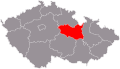
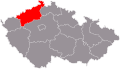
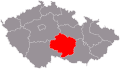
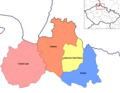
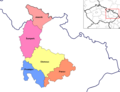
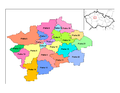
Regions of the Czech Republic
actual regions and historical parts of the Czech Republic
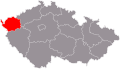
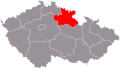
Bohemia
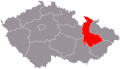
Moravia
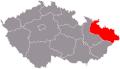
Czech Silesia
Czech Silesia

History maps

This section holds a short summary of the history of the area of present-day the Czech Lands, illustrated with maps, including historical maps of former countries and empires that included present-day the Czech Lands.

Possible extent of (proto-)Celtic influence 800-400 BC
Celts in Europe
Map showing the pre-Migration Age distribution of the Germanic tribes in Proto-Germanic times, and stages of their expansion up to 50 BC, AD 100 and AD 300. The extent of the Roman Empire in 68 BC and AD 117 is also shown.
Ancient Germania
Rise of the Frankish Empire
Carolingian Empire around 800
The Frankish Empire
[[|border|250x400px]] Final division of the Frankish Empire in the Treaty of Verdun
Carolingian Empire (in French)
Europe in 814

Europa im Jahre 814
Treaty of Verdun (843) and Treaty of Meerssen (870)
Division of the Frankish Empire after 870
Great Moravia
Central Europe 919-1125
File:HRE 11Jh.PNG Holy Roman Empire 11th century
Area of Ottokar II of Bohemia 1253-1271
The Holy Roman Empire in the 14th century
The Holy Roman Empire and its circles in 1512
The (Habsburg) Empire of Charles I/V.
   Castile
   Aragon
   Burgundy
   Habsburg
The (Habsburg) Empire of Charles I/V
The religious situation in central Europe about 1618
Area controlled by the Holy Roman Empire around 1630
[[|border|250x400px]] Europe in 1812
German Confederation
borders of the German Confederation in 1820
Alliances of the member-states of the former German Confederation in the Austro-Prussian War, 1866
Aftermath of the Austro-Prussian War (1866).
In 1867 the Austrian Empire was continued by Austria-Hungary, making both Austria and Hungary constituent monarchies.
Kingdoms and countries of Austria–Hungary:
Cisleithania: 1. Bohemia, 2. Bukovina, 3. Carinthia, 4. Carniola, 5. Dalmatia, 6. Galicia, 7. Austrian Littoral, 8. Lower Austria, 9. Moravia, 10. Salzburg, 11. Silesia, 12. Styria, 13. Tyrol, 14. Upper Austria, 15. Vorarlberg; Transleithania: 16. Hungary, 17. Croatia and Slavonia; 18. Bosnia and Herzegovina
Religions in Austria-Hungary, Andrees Allgemeiner Handatlas, 1st Edition, Leipzig (Germany) 1881
Ethnic map of Austria-Hungary, census 1880. German version
Ethnic map of Austria-Hungary, census 1890. English version
Historical map of Austria-Hungary from the Bibliothek allgemeinen und praktischen Wissens für Militäranwärter Band I, 1905
Historical Silesia
Proposed United States of Greater Austria
The end of Austria-Hungary (in German)
Austria became an independent country after the dissolution of Austria-Hungary. This map shows the claims of German-Austria in 1918 including large areas of the Czech lands. The red lines are the real borders realized and presently.
The same map in English
Location of Czechoslovakia 1918-1993
Czechoslovak claim on territory disputed with Poland in 1920
Czechoslovakia 1928
Sudetenland
Historical Egerland (Chebsko) 1322-1806 and the Eger region (Regierungsbezirk Eger) of Sudetenland
The borders of Germany on August 31, 1939
Idem
Administrative districts in territories under the control of Nazi Germany in 1941.

Großdeutschland im Jahre 1941
Eastern front of the Second World War circa 1941-1942.
The Allied offensive on Southern Central Europe
Czechoslovakia 1969

Old maps

This section holds copies of original general maps older than 70 years of this entry.

Historical map of Bohemia (Bohemia proper - pink, Moravia - yellow, Austrian/Bohemian Silesia - orange) by the German Brockhaus Konversations-Lexikon, 1892

Satellite maps

Satellite map

Notes and references

General remarks:

  • The WIKIMEDIA COMMONS Atlas of the World is an organized and commented collection of geographical, political and historical maps available at Wikimedia Commons. The main page is therefore the portal to maps and cartography on Wikimedia. That page contains links to entries by country, continent and by topic as well as general notes and references.
  • Every entry has an introduction section in English. If other languages are native and/or official in an entity, introductions in other languages are added in separate sections. The text of the introduction(s) is based on the content of the Wikipedia encyclopedia. For sources of the introduction see therefore the Wikipedia entries linked to. The same goes for the texts in the history sections.
  • Historical maps are included in the continent, country and dependency entries.
  • For Burma, see Myanmar; Great Britain and Northern Ireland, see United Kingdom; Ivory Coast, see Côte d'Ivoire; Pridnestrovie, see Transnistria; Taiwan, see China, Republic of; Timor-Leste, see East Timor.
  • The status of various entities is disputed. See the content for the entities concerned.
  • The maps of former countries that are more or less continued by a present-day country or had a territory included in only one or two countries are included in the atlas of the present-day country. For example the Ottoman Empire can be found in the Atlas of Turkey.

Entries available in the atlas

General pages
Atlas · Historical atlas · Index of the Atlas · Names in native languages

The world and its continents and oceans
General maps of the world · Historical maps of the world · Old maps · Africa · North and South America · Antarctica · Asia · Europe (History, European Union) · Oceania · Oceans

Historical era and themes
Prehistory · Antiquity · Middle Ages · Rise of Islam · Early Modern Age · Early American Societies · Early Asian Societies · Age of Renaissance · Colonialism · 20th Century · World War I · World War II

Countries with undisputed status
Afghanistan · Albania · Algeria · Andorra · Angola · Antigua and Barbuda · Argentina · Armenia · Australia · Austria · Azerbaijan · Bahamas · Bahrain · Bangladesh · Barbados · Belarus · Belgium · Belize · Benin · Bhutan · Bolivia · Bosnia and Herzegovina · Botswana · Brazil · Brunei · Bulgaria · Burkina Faso · Burundi · Cambodia · Cameroon · Canada · Cape Verde · Central African Republic · Chad · Chile · China · Colombia · Comoros · Congo (Democratic Republic) · Congo (Republic) · Costa Rica · Côte d’Ivoire · Croatia · Cuba · Cyprus · Czech Republic · Denmark · Djibouti · Dominica · Dominican Republic · East Timor · Ecuador · Egypt · El Salvador · Equatorial Guinea · Eritrea · Estonia · Ethiopia · Fiji · Finland · France · Gabon · Gambia · Georgia · Germany · Ghana · Greece · Grenada · Guatemala · Guinea · Guinea-Bissau · Guyana · Haiti · Honduras · Hungary · Iceland · India · Indonesia · Iran · Iraq · Ireland · Israel · Italy · Jamaica · Japan · Jordan · Kazakhstan · Kenya · Kiribati · Korea (Democratic People’s Republic) · Korea (Republic) · Kuwait · Kyrgyzstan · Laos · Latvia · Lebanon · Lesotho · Liberia · Libya · Liechtenstein · Lithuania · Luxembourg · Macedonia (Republic) · Madagascar · Malawi · Malaysia · Maldives · Mali · Malta · Marshall Islands · Mauritania · Mauritius · Mexico · Micronesia (Federated States) · Moldova · Monaco · Mongolia · Montenegro · Morocco · Mozambique · Myanmar · Namibia · Nauru · Nepal · The Netherlands · New Zealand · Nicaragua · Niger · Nigeria · Norway · Oman · Pakistan · Palau · Panama · Papua New Guinea · Paraguay · Peru · Philippines · Poland · Portugal · Qatar · Romania · Russia · Rwanda · Saint Kitts and Nevis · Saint Lucia · Saint Vincent and the Grenadines · Samoa · San Marino · São Tomé and Príncipe · Saudi Arabia · Senegal · Serbia · Seychelles · Sierra Leone · Singapore · Slovakia · Slovenia · Solomon Islands · Somalia · South Africa · Spain · Sri Lanka · Sudan · Suriname · Swaziland · Sweden · Switzerland · Syria · Tajikistan · Tanzania · Thailand · Togo · Tonga · Trinidad and Tobago · Tunisia · Turkey · Turkmenistan · Tuvalu · Uganda · Ukraine · United Arab Emirates · United Kingdom · United States · Uruguay · Uzbekistan · Vanuatu · Vatican City · Venezuela · Vietnam · Yemen · Zambia · Zimbabwe

Countries with disputed status
Abkhazia · China (Republic)/Taiwan · Kosovo · Nagorno-Karabakh · Northern Cyprus · Palestine · Somaliland · South Ossetia · Tamil Eelam · Transnistria · Western Sahara

Dependencies and other overseas territories
Akrotiri and Dhekelia · Åland · American Samoa · Anguilla · Aruba · Ascension Island · Ashmore and Cartier Islands · Baker Island · Bermuda · Bouvet Island · British Indian Ocean Territory · British Virgin Islands · Cayman Islands · Christmas Island · Clipperton Island · Cocos (Keeling) Islands · Cook Islands · Coral Sea Islands · Faroe Islands · French Guiana · French Polynesia · French Southern and Antarctic Lands · Gibraltar · Greenland · Guadeloupe · Guam · Guantanamo Bay · Guernsey · Heard Island and McDonald Islands · Hong Kong · Howland Island · Isle of Man · Jan Mayen · Jarvis Island · Jersey · Johnston Atoll · Kingman Reef · Macau · Martinique · Mayotte · Midway Atoll · Montserrat · Navassa Island · Netherlands Antilles · New Caledonia · Niue · Norfolk Island · Northern Mariana Islands · Palmyra Atoll · Pitcairn Islands · Puerto Rico · Réunion · Saint Helena · Saint-Barthélemy · Saint Martin (France) · Saint-Pierre and Miquelon · Svalbard · Tokelau · Tristan da Cunha · Turks and Caicos Islands · United States Virgin Islands · Wake Island · Wallis and Futuna

Disputed areas
Kashmir · Paracel Islands · Spratly Islands · Falkland Islands · South Georgia and South Sandwich Islands

Subnational autonomous entities
Aceh · Adjara · Adygea · Altai · Andalusia · Aosta Valley · Aragon · Athos · Azores · Balearic Islands · Bashkortostan · Basque Autonomous Community · Bougainville · Brussels · Buryatia · Canary Islands · Catalonia · Chechnya · Chuvashia · Corsica · Crimea · Curaçao · Dagestan · Easter Island · England · Extremadura · Bosnia and Herzegovina (Federation of) · Flanders · Friuli-Venezia Giulia · Gagauzia · Galicia · Galápagos Islands · Gorno-Badakhshan · Guangxi · Ingushetia · Inner Mongolia · Kabardino-Balkaria · Kalmykia · Karachay-Cherkessia · Karakalpakstan · Karelia · Khakassia · Komi · Kurdistan (Iraqi) · Madeira · Mari El · Mindanao · Mordovia · Nakhichevan · Navarre · Nevis · Ningxia · North Ossetia-Alania · Northern Ireland · Quebec · Saint Martin (Netherlands) · Sakha · Sardinia · Scotland · Sicily · Srpska · Tatarstan · Tibet · Trentino-Alto Adige · Tuva · Udmurtia · Vojvodina · Wales · Wallonia · Xinjiang · Zanzibar

Other regions
Basque Country · Burzenland · Kurdistan · Sápmi

Former countries
Austria-Hungary · Byzantine Empire · Caliphate · Czechoslovakia · Frankish Empire · Inca Empire · Macedonian Empire · Prussia · Roman Empire · Soviet Union · Yugoslavia

Themes
Administrative divisions · International organizations · Languages · Religions

Old atlas
Stielers Handatlas 1891

Personal tools
In Wikipedia